New driveway construction almost always requires at least one permit and commonly requires two or three. The specific combination depends on your road type, location, material choice, and whether any drainage structures are involved. This guide covers the full picture for a brand-new driveway connecting to a public road.
The Three Permits That May Apply
1. Right-of-Way / Access Permit
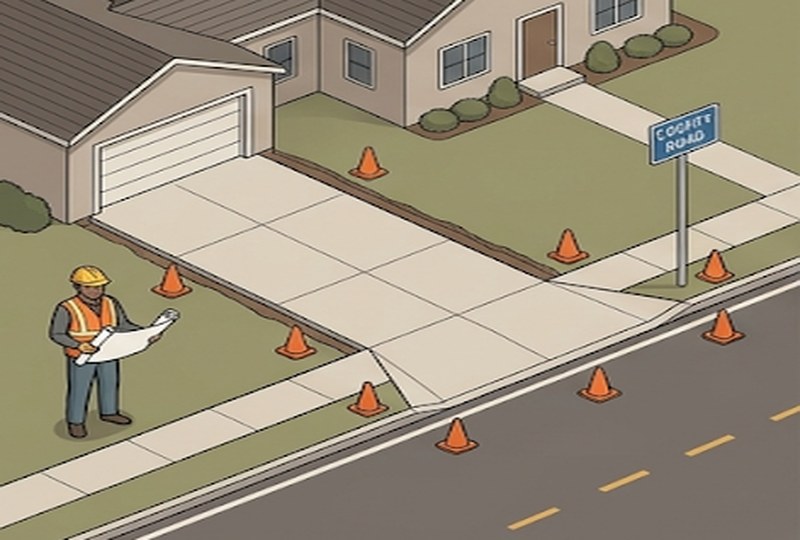
Required whenever the new driveway creates a new opening (cut) in the curb, shoulder, or roadside to connect to the public road. This is issued by whoever maintains the road — city public works, county engineer, or state DOT. This permit is virtually always required for new construction. See Driveway Apron Permit for full details.
2. Building Permit (Private Property Portion)
Many municipalities require a building permit for any new paved surface above a minimum size (typically 200–500 sq ft). This permit covers the private-property portion of the driveway — the actual surface you park and drive on. It's issued by your local building department and involves a plan review to verify drainage, setbacks, and impervious surface limits.
3. Culvert Permit
Required if the new driveway crosses a roadside drainage ditch on a county or rural road. The county engineer specifies the pipe size, material, and installation requirements. See Culvert Driveway Permit Requirements for full details on this permit.
What the Application Process Looks Like
Determine road type and jurisdiction
Is your new driveway connecting to a city street, county road, or state highway? This determines which agency issues your access permit. Call your county engineer's office if you're unsure — they'll tell you who has jurisdiction.
Get a pre-application site visit (if available)
Many county engineers offer a free site visit before the application to evaluate sight lines, drainage, and culvert need. This prevents expensive surprises. Request it when you call.
Prepare site sketch and documentation
You'll need: a sketch showing lot dimensions and proposed driveway location, distance from the road intersection, width and length of proposed driveway, contractor's name and license number, and culvert specs if required. Download our Preparation Checklist for the full list.
Submit and pay
Submit to the correct agency (road authority for the access permit, building department for the building permit — these are often separate agencies). Typical combined permit costs: $50–$300 for most residential new driveways.
Build with permit posted on site
Many jurisdictions require the permit card to be visible at the construction site. Keep a copy of the permit documents accessible.
Call for inspections at required stages
Most new driveway permits require at minimum a final inspection. If a culvert is involved, a mid-construction pipe inspection (before backfill) is required. See the full inspection process at What Inspectors Check.
Typical Permit Fees for New Driveway Construction
| Jurisdiction Type | Access/ROW Permit | Building Permit | Culvert (if needed) |
|---|---|---|---|
| Rural county road | $20–$75 | Often exempt | $0–$50 (many free) |
| City/suburban | $50–$150 | $50–$200 | Usually N/A |
| State highway | $100–$500 | $50–$200 | Included in ROW |
Setback Requirements for New Driveways
Many municipalities require driveways to be set back from property lines — commonly 2 to 5 feet from the side property line. This prevents conflict with neighboring driveways and ensures a grassed or landscaped buffer. In dense urban areas, the setback may be 0 feet (driveways can abut the property line). Check your local zoning code for the specific setback that applies to your lot before you place the driveway.
What If There's Already an Informal Gravel Path?
If you're formalizing and paving over an informal gravel or dirt track, the permit process is the same as new construction — the existing path is not a legal driveway in most jurisdictions' eyes unless it was permitted at some point. Don't assume a pre-existing path exempts the project from the access permit requirement.
Frequently Asked Questions
How long does it take to get a new driveway permit?
For a simple residential driveway on a city or county road: 3–10 business days in most jurisdictions. For a state highway: 4–8 weeks. If the project requires a drainage engineering review (steep slopes, large drainage area, flood-prone area), add another 2–4 weeks. Build at least 2 weeks of permit lead time into any project schedule.
Can I build a new driveway myself in most states?
For the private-property paving, many jurisdictions allow homeowner self-construction. For the apron and any ROW work, many jurisdictions require a licensed contractor. Check your specific jurisdiction's requirements. Even where DIY is allowed, concrete flatwork and proper sub-base compaction benefit significantly from professional execution.
What's the maximum width allowed for a new residential driveway?
This varies by jurisdiction but commonly: 12 feet minimum, 24 feet maximum for single-family residential. Properties with three-car garages may qualify for wider aprons in some cities. Maximum width for the private portion is typically governed by setback rules (must stay within your property with required buffers) rather than an absolute width cap.
Does a new driveway affect my property taxes?
Potentially yes. Adding a paved driveway is an improvement to real property and may be captured during your county's next reassessment cycle. The impact is typically small — a few dollars per year in increased property tax — but it varies by your county's assessment practices. This is not a reason to skip permits; unpermitted improvements are still taxable and also carry the resale and enforcement risks described elsewhere on this site.
Related: Apron Permit · Culvert Requirements · Permit Checker · Preparation Checklist
Disclaimer: Requirements vary by jurisdiction. Always verify with your local permitting authority before beginning construction.